

 Image 1 of 1
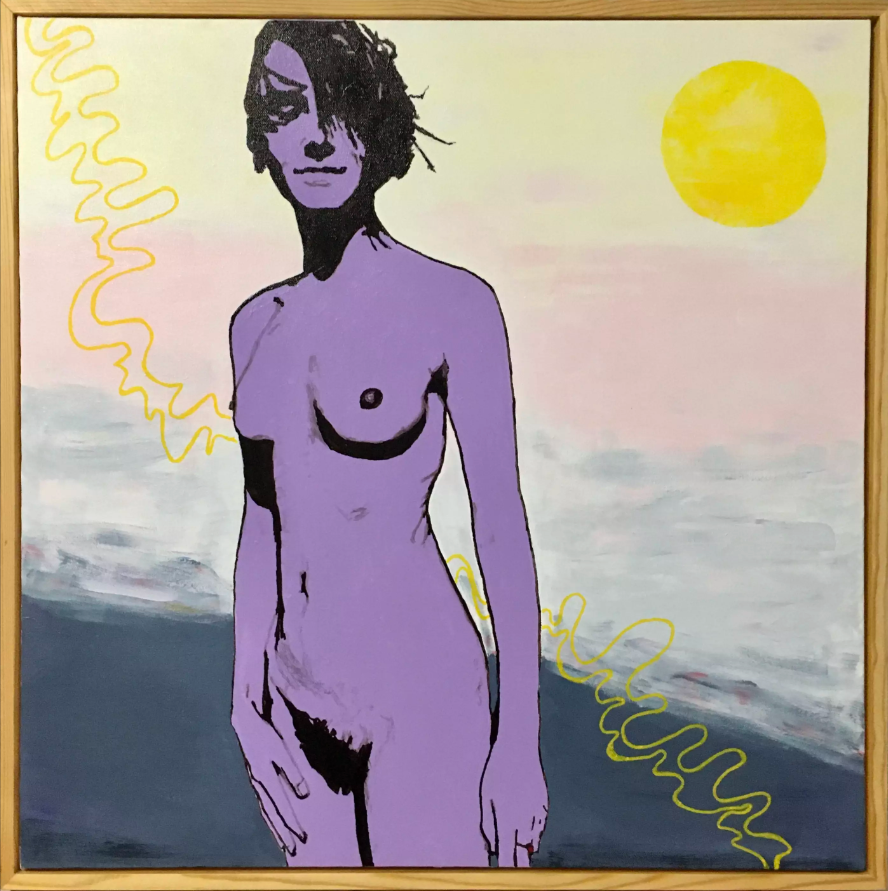
Medium: Acrylic, Canvas, Framed by Artist
Dimensions: 65cm (W) x 65cm (H) x 4cm (D)
Freikörperkultur I is derived from the East German Naturists Movement in the early 1970s.
German naturism was part of the Lebensreform movement and the Wandervogel youth movement of 1896, from Steglitz, Berlin, which promoted ideas of fitness and vigour. At the same time, doctors of the Natural Healing Movement were using heliotherapy, treating diseases such as tuberculosis, rheumatism, and scrofula with exposure to sunlight.
Nacktkultur, a term coined in 1903 by Heinrich Pudor, connected nudity, vegetarianism and social reform, and was practised in a network of 200 members clubs. The movement gained prominence in the 1920s by offering a health giving life-style with Utopian ideals. Germany published the first naturist journal between 1902 and 1932, but it became politicised by radical socialists who believed it would lead to classlessness and a break down of society. It eventually became associated with pacificism.
In 1926, Adolf Koch established a school of naturism in Berlin, encouraging a mixing of the genders, open air exercises, and a programme of "sexual hygiene". In 1929 the Berlin school hosted the first International Congress on Nudity.
After World War II, East Germans were free to practice naturism, chiefly at beaches rather than clubs (private organizations were regarded as potentially subversive). Naturism became a large element in DDR politics. The Proletarische Freikörperkulturbewegung subsection of the Workers Sports Organisation had 60,000 members.
Since reunification there are many clubs, parks and beaches open to naturists, though nudity has become less common in the former eastern zone. Germans are typically the most commonly seen visitors at nude beaches in France and around Europe.
Freikörperkultur I is derived from the East German Naturists Movement in the early 1970s.
German naturism was part of the Lebensreform movement and the Wandervogel youth movement of 1896, from Steglitz, Berlin, which promoted ideas of fitness and vigour. At the same time, doctors of the Natural Healing Movement were using heliotherapy, treating diseases such as tuberculosis, rheumatism, and scrofula with exposure to sunlight.
Nacktkultur, a term coined in 1903 by Heinrich Pudor, connected nudity, vegetarianism and social reform, and was practised in a network of 200 members clubs. The movement gained prominence in the 1920s by offering a health giving life-style with Utopian ideals. Germany published the first naturist journal between 1902 and 1932, but it became politicised by radical socialists who believed it would lead to classlessness and a break down of society. It eventually became associated with pacificism.
In 1926, Adolf Koch established a school of naturism in Berlin, encouraging a mixing of the genders, open air exercises, and a programme of "sexual hygiene". In 1929 the Berlin school hosted the first International Congress on Nudity.
After World War II, East Germans were free to practice naturism, chiefly at beaches rather than clubs (private organizations were regarded as potentially subversive). Naturism became a large element in DDR politics. The Proletarische Freikörperkulturbewegung subsection of the Workers Sports Organisation had 60,000 members.
Since reunification there are many clubs, parks and beaches open to naturists, though nudity has become less common in the former eastern zone. Germans are typically the most commonly seen visitors at nude beaches in France and around Europe.
Medium: Acrylic, Canvas, Framed by Artist
Dimensions: 65cm (W) x 65cm (H) x 4cm (D)