

Martin Sharp’s Yellow House
A Brief, Brilliant Experiment in Living Art
By Steve Starr
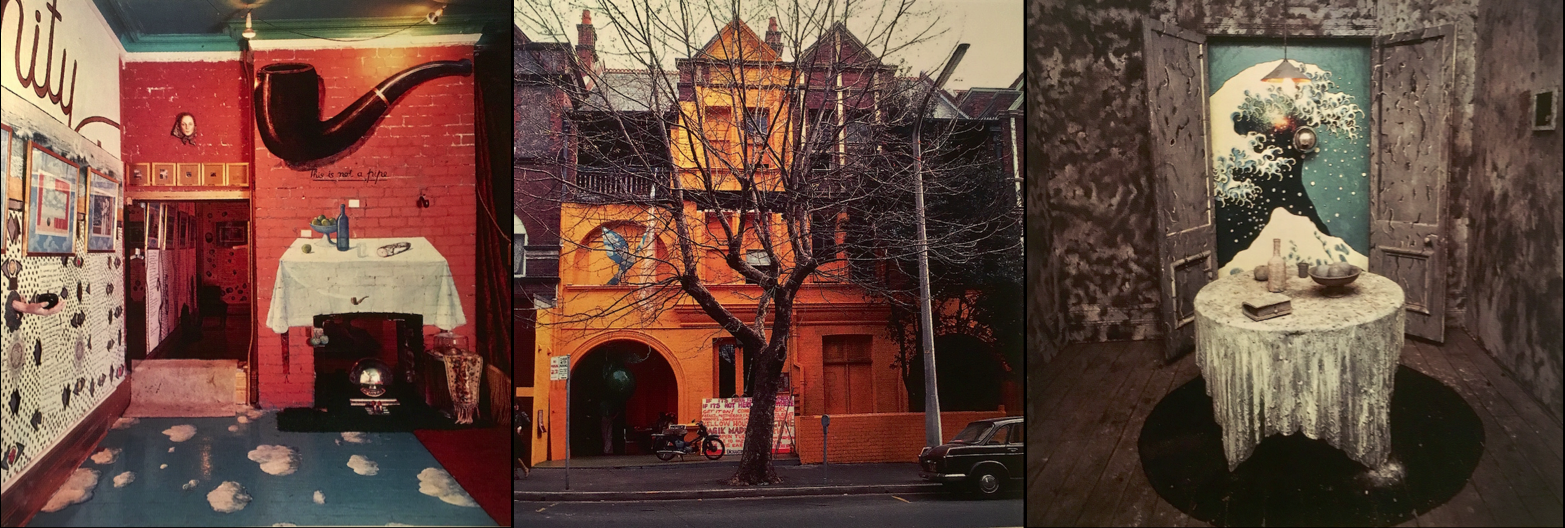
When Australian artist Martin Sharp returned from London in the late 1960s, he carried with him more than the psychedelic sensibility that had shaped his work with Oz magazine and the counterculture. He also carried an idea — one borrowed from Vincent van Gogh, whose dream of establishing an artist colony in Arles never came to fruition. Sharp imagined reviving that dream in Sydney, creating a place where artists could live, work, experiment and, crucially, collaborate. Between 1969 and 1970, that idea took physical form in a rambling terrace on Macleay Street, Potts Point. He called it The Yellow House.
Painted a blazing, impossible yellow in homage to Van Gogh’s home in the south of France, the building became a beacon of Sydney’s avant‑garde. Sharp’s ambition was expansive: he wanted an environment where artists could practise freely, share ideas across disciplines, and dissolve the boundaries between art forms. The Yellow House was not a gallery, not a studio, not a commune — but something in between, a living artwork shaped by everyone who entered it.
From the moment it launched on April Fools’ Day, 1971 — a date chosen with typical Sharpian irreverence — the house became a hive of activity. Artists were invited to transform rooms into immersive environments, creating murals, installations, films, theatre and music. The result was a sprawling, collaborative installation referencing the history of art while simultaneously pushing against it.
One of the most memorable spaces was George Gittoes’ Puppet Room, a chamber of Dadaist mime, cabaret and absurdist performance. Gittoes embraced the anarchic spirit of Dada, turning the room into a stage where humour, chaos and critique collided.
Nearby, the Magritte Room paid homage to surrealism. Sharp and his collaborators installed prints by René Magritte, surrounding them with Magritte‑inspired murals and contemporary works by Brett Whiteley and Peter Powditch. The effect was a playful dialogue between European surrealism and Australian modernism, collapsing time and geography into a single, dreamlike space.
Sharp himself created the Fantomas Hall, an installation of found objects anchored by a mural referencing Hokusai’s Under the Wave off Kanagawa (c.1821–33). This fusion of pop culture, Japanese printmaking and cinematic villainy (Fantomas being a French pulp anti‑hero) exemplified Sharp’s eclectic, boundary‑breaking approach.
Elsewhere, filmmaker Albie Thomas established the Ginger Meggs Memorial School of Art, offering classes in filmmaking that reflected the Yellow House’s commitment to experimentation and cross‑disciplinary learning.
The Yellow House burned brightly but briefly. By late 1971, Sharp had returned to London, and without his leadership — or any real fiscal management — the project dissolved. Yet its impact endures. The Yellow House was a precursor to contemporary installation practice, a space where the archive was not used to reanimate trauma but to celebrate art history with irreverence, humour and affection.
In its short life, the Yellow House demonstrated what can happen when artists are given permission to play. It remains a vivid reminder that art history is not only something to study — it is something to inhabit, reinvent and, occasionally, paint bright yellow.
Rosaleen Norton
The Witch of Kings Cross
Steve Starr
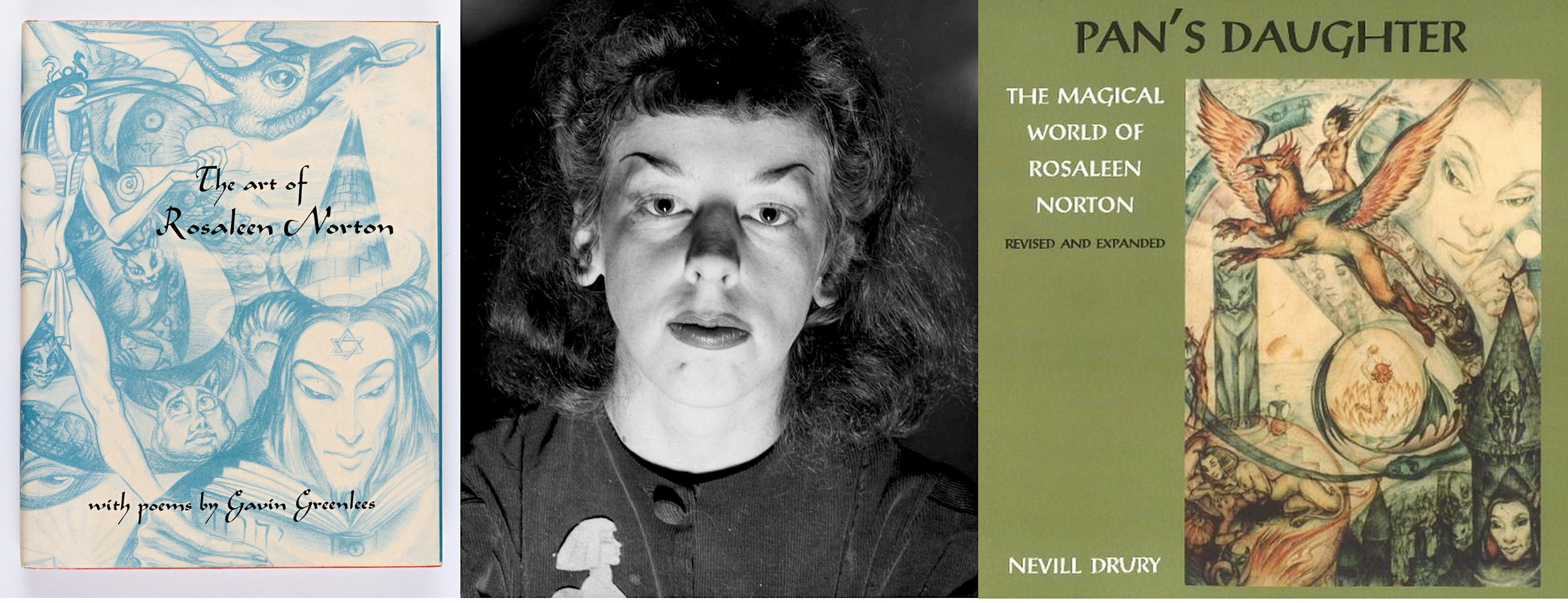
Rosaleen Norton, known affectionately as “Roie” and famously dubbed the “Witch of Kings Cross,” occupies a remarkable intersection of art, occultism, sexuality and public scandal in mid-20th century Sydney.
Born in Dunedin, New Zealand, in 1917, Norton moved with her family to Sydney as a child. From an early age she spoke of visions and experiences that drew her towards an esoteric spirituality. As she grew older, these interests became inseparable from her identity as an artist. She did not simply paint unusual images; she constructed an entire world around them—a world of ritual, symbolism, sexuality and altered states of consciousness.
By the late 1940s, Norton had become closely associated with Kings Cross. At the time, the Cross was already acquiring its reputation as Sydney’s nocturnal underworld: a place of theatres, bars, artists, prostitutes, gamblers, bohemians and people living beyond the boundaries of respectable society. For Norton, it offered something more important than notoriety. It was a place where an unconventional life could be lived openly.
Norton embraced occult traditions and drew upon ceremonial magic, pagan imagery and trance practices. She was fascinated by Aleister Crowley and explored the relationship between sexuality, ritual and spiritual experience. Her paintings became visual expressions of this private cosmology, populated by strange figures, erotic imagery and supernatural beings.
What made Norton particularly threatening to conservative Australia was that she refused to keep these beliefs private. Her spirituality appeared in her paintings, her performances, her relationships and the way she presented herself to the world. In an era when women were expected to be modest, domestic and respectable, Norton claimed the right to define herself on her own terms.
The reaction was ferocious.
Newspapers transformed her into a sensational figure, circulating stories of “witchcraft,” satanism and sexual ritual. The distinction between what Norton actually practised and what the press imagined became increasingly blurred. Her artwork was condemned as obscene; works were seized or suppressed, and Norton herself faced prosecution.
The scandal turned her into a kind of living myth. To some, she was a dangerous occultist corrupting the moral fabric of society. To others, she represented something much more unsettling: a woman who refused to surrender her sexuality, imagination or spiritual beliefs to conventional authority.
Later documentary accounts, including The Witch of Kings Cross, have helped move Norton beyond the tabloid caricature and towards a more complex portrait of the woman herself. Beneath the mythology was an artist who took her inner life seriously and attempted to make that invisible world visible.
Perhaps that is why Norton’s story continues to resonate.
Her legacy is not simply about witchcraft or scandal. It is about the uneasy space between artistic freedom and social control, between private belief and public judgment. Kings Cross became both the setting for her life and a metaphor for it—a crossroads where respectable Sydney met its outsiders, where boundaries became blurred, and where people could construct identities beyond the rules of the mainstream.
Rosaleen Norton ultimately became more than the “Witch of Kings Cross.” She became a symbol of what can happen when a woman refuses to be domesticated by someone else’s morality—and insists on turning her own vision into art.
Anaïs Nin
The Art of Beautiful Contradictions
Steve Starr
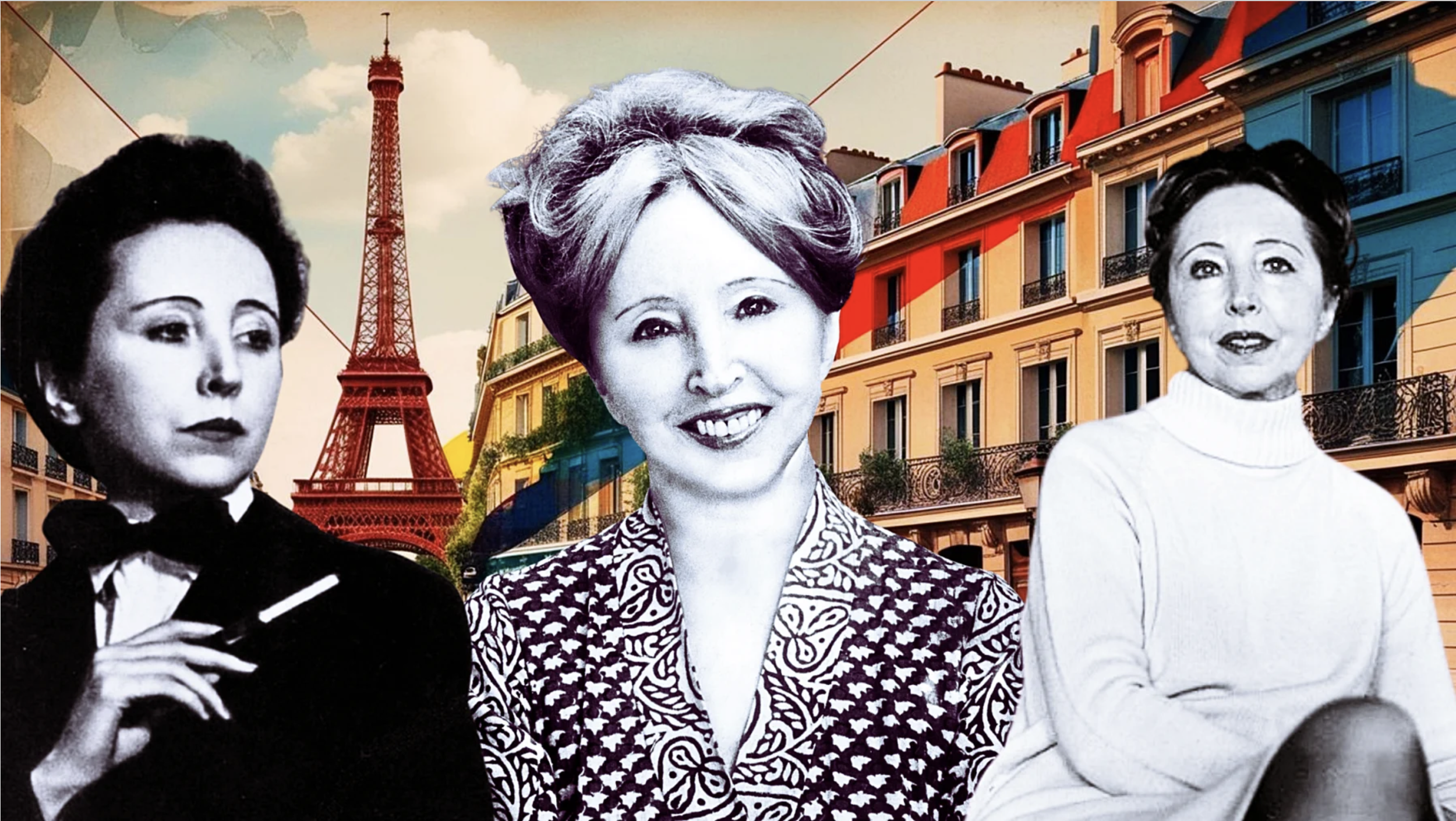
Anaïs Nin has always belonged to the people who read between the lines. The ones who keep notebooks in their bags “just in case,” who collect phrases like pressed flowers, who suspect that the inner world is not a refuge from life but a parallel universe running alongside it. If you’re reading this, chances are you’re one of them.
Nin would have liked that.
Born in 1903 in France to Cuban parents, she arrived in the world with a name that sounded like a spell and a temperament to match. Her father, a composer, left the family early, and the wound became one of the subterranean rivers that fed her writing. She began her diary at eleven, on a ship crossing the Atlantic, and never stopped. By the time she died in 1977, she had written thousands of pages — a life’s work that was less a record than a long, shimmering act of self‑invention.
The Diary as a Portal
Most people keep diaries to remember. Anaïs Nin kept hers to become.
She wrote as if the page were a mirror that could be coaxed into revealing a truer reflection. Her diaries are full of dreams, lovers, anxieties, psychoanalytic revelations, and the kind of emotional weather reports that would make a meteorologist weep. She was not interested in objectivity. She was interested in the truth that trembles beneath the surface of things.
In the 1930s, she lived in Paris, orbiting the Surrealists and studying psychoanalysis with Otto Rank. Her writing from this period feels like a séance conducted in a velvet‑lined room: lush, symbolic, and slightly dangerous. She was excavating herself with the tools of art and psychology, and she didn’t care if the results made people uncomfortable.
Henry Miller, Otto Rank, and the Parisian Entanglements
If Paris in the 1930s was a stage, Anaïs Nin was one of its most intriguing performers. She met Henry Miller in 1931, and their relationship — part romance, part rivalry, part creative combustion — has been mythologised to the point of distortion. They wrote to each other with the intensity of two people who believed words could rearrange reality.
But Nin was not a muse. She was a maker.
Her sessions with Otto Rank were equally formative. Rank believed that creativity was a form of self‑birth, and Nin took this idea and ran with it — straight into the labyrinth of her own psyche. Her writing became a kind of alchemy: transforming experience into symbol, desire into narrative, contradiction into coherence.
The American Reinvention (Because One Life Was Never Enough)
When war loomed, Nin left Paris for New York and reinvented herself with the ease of someone who had already lived several lives. She married Hugh Parker Guiler, who supported her work, and later — in a twist that would make even the boldest reader raise an eyebrow — married a second man, Rupert Pole, without dissolving the first marriage.
Bigamy, for Nin, was less scandal than metaphor. She had always been more than one person at once.
In America, she lectured, wrote, and cultivated a devoted following. But it wasn’t until the publication of her diaries in the 1960s that she became a literary phenomenon. Suddenly, she was the patron saint of introspective women, bohemians, feminists, and anyone who had ever felt that their inner life was too large to fit inside the expectations of the world.
Make Erotica, But Make It Art
Nin’s erotica — Delta of Venus and Little Birds — was written under unusual circumstances. A mysterious collector paid her one dollar per page and demanded “less poetry, more sex.” Nin obliged, but she smuggled in lyricism anyway. Her erotica is atmospheric rather than explicit, more interested in the emotional temperature of desire than in its mechanics.
She once said she wrote erotica “for the feeling, not the description.”
A Woman of Contradictions (The Best Kind)
Anaïs Nin was a constellation of contradictions: fiercely private yet radically confessional, feminist icon yet unreliable narrator, diarist and myth‑maker, grounded in psychoanalysis yet prone to dreamlike abstraction, both muse and artist, both wife and bigamist and both truth‑teller and fabulist.
She didn’t resolve these contradictions. She lived inside them, like a house with many rooms.
Why She Still Matters
We all have a soft spot for the quietly rebellious — the poets who work in sheds, the painters who live on windswept coasts, the writers who treat the inner world as a landscape as real as the Southern Alps. Anaïs Nin fits right in.
She reminds us that the interior life is not indulgent; it is essential. That contradiction is not a flaw; it is a form of richness. That art is a way of shaping the self. That desire — emotional, intellectual, creative — is a force worth taking seriously. That a life can be messy and meaningful at the same time.
In an era obsessed with clarity, Nin offers something more interesting: ambiguity with intention. She invites us to inhabit our complexities rather than tidy them away.
The Untamed Force of Being Fully Alive
Anaïs Nin once wrote, “We write to taste life twice, in the moment and in retrospect.”
It’s a line that feels like it was written for the readers of who write — the ones who understand that art is not a luxury but a way of paying attention.
Nin tasted life again and again: through words, through lovers, through reinvention, through the endless excavation of her own depths. She was not always honest, but she was always truthful. There is a difference, and she understood it intimately.
Her legacy is not a neat narrative. It is a shimmering, shifting collage — part diary, part dream sequence, part confession, part performance. And perhaps that is why she endures.
Because in the end, Anaïs Nin was not offering a model of how to live. She was offering permission to be complicated and contradictory. Which, if we’re being honest, is the most delicious fatuity of all.

Blitz
The Club That Shaped the 80s
By Steve Starr
Design Museum, London — Exhibition Review
Published in Jimmy Hornet Magazine Edition 13
London’s Design Museum has never shied away from bold cultural statements, but Blitz: The Club That Shaped the 80s might be its most exuberant yet. More than a retrospective, it’s a full‑throttle immersion into the short‑lived Covent Garden club night that ignited the New Romantic movement and rewired the visual language of a decade.
Behind a door in a side street, the Blitz club was the place where 1980s style began. Inspired by everything from David Bowie, the punk and soul scenes, to continental cinema and cabaret culture, the brightest young talents of their generation came together to revolutionise fashion, music and design, turning a niche club night into a launchpad for global superstardom.
The exhibition opens with a jolt of energy: a corridor of photographs, fanzines, and ephemera that instantly situates the visitor in late‑70s London—a city still shaking off punk’s nihilism and hungry for reinvention. The Blitz Kids, as the regulars became known, answered that hunger with theatricality, art‑school experimentation, and a refusal to blend in. The Design Museum captures this spirit with a curatorial approach that feels both scholarly and delightfully indulgent.
Fashion is the undeniable star of the show. More than 250 garments and accessories—some fragile, some defiantly flamboyant—are displayed like relics from a parallel universe. Outfits by Kim Bowen, Melissa Caplan, and Vivienne Lynn reveal how the club became a nightly runway, a place where identity was crafted with scissors, sequins, and sheer audacity. The mannequins are arranged in dynamic poses, echoing the performative swagger of the era.
Music and multimedia elements pulse throughout the exhibition, but never overwhelm it. Archival footage of early Spandau Ballet performances, along with photography by Sheila Rock and Derek Ridgers, gives the show its emotional backbone. These images capture the Blitz Kids not as caricatures of excess, but as young creatives forging a new aesthetic language in real time.
One of the exhibition’s strengths is its refusal to romanticise the past. It acknowledges the club’s exclusivity, the tensions within the scene, and the socioeconomic backdrop of a Britain on the cusp of Thatcherism. Yet it also makes a compelling case for the Blitz as a crucible of creativity—a place where fashion, music, and design collided with lasting impact.
If there’s a flaw, it’s simply that the exhibition’s atmospheric narrow galleries can feel crowded during peak hours. But perhaps that’s fitting. The Blitz was famously hard to get into; a little squeeze only adds to the authenticity.
Explore objects, archives and multimedia material collected by curator Danielle Thom and assistant curator Minnie Bates, that includes over 200 items ranging from clothing and accessories, musical instruments, furniture, photography, and rare film footage.
Ultimately, Blitz: The Club That Shaped the 80s is a stylish, intelligent, and unexpectedly moving tribute to a cultural moment that burned bright and fast. For anyone interested in the alchemy of subculture, creativity, and self‑invention, it’s essential viewing.
Venus Rising
Four Short Stories of Sex, Strong Women, Defiance & Liberation
By Steve Starr
Published by S+G+P Publishing
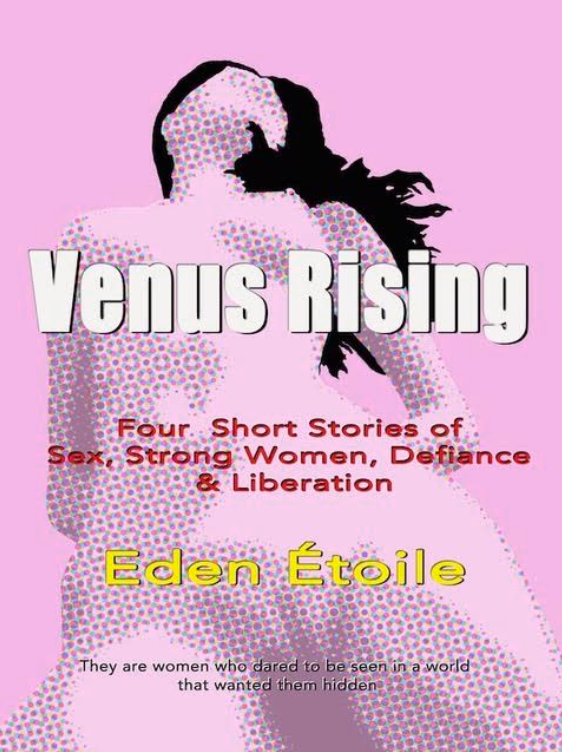
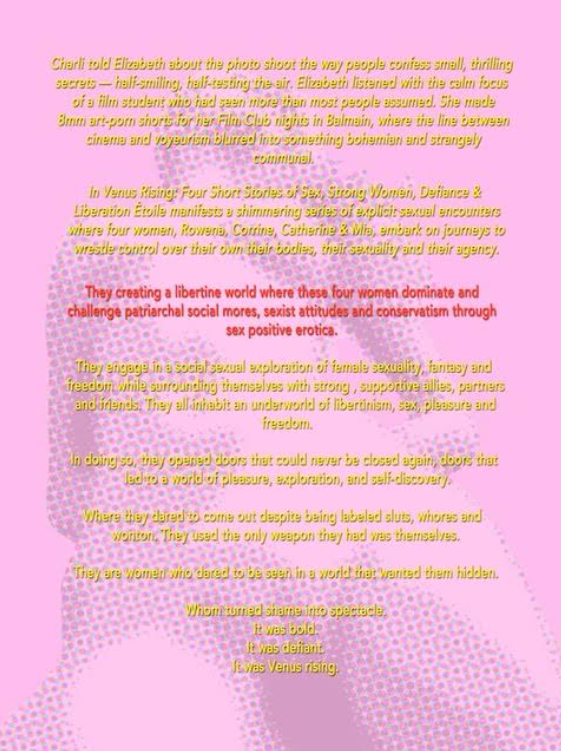
Our recently launched publishing arm, S+G+P Publishing, are pleased to announce our first release: Venus Rising: Four Short Stories of Sex, Strong Women, Defiance & Liberation by emerging Melbourne author Eden Étoile (edited by Steve Starr).
Venus Rising: Four Short Stories of Sex, Strong Women, Defiance & Liberation, are stories where Étoile conjures a shimmering series of explicit sexual encounters where four women, Rowena, Corrine, Catherine & Mia, embark on journeys of self-discovery in order to wrestle control over their own their bodies, their sexuality and their agency. They enter a libertine world where women dominate and challenge patriarchal social mores, sexist attitudes and conservatism through sex positive feminist erotica film and performance.
Rowena, Corrine, Catherine & Mia engage in a social sexual exploration of female sexuality, fantasy and freedom while surrounding themselves with strong, supportive allies, partners and friends. They all inhabit an underworld of libertinism, cosplay, sex, pleasure and freedom. But the heavy hand of the government censorship, the Obscenity Law and religion target them. They engage these forces fearlessly, batting the tempest that besiege their tribe.
In doing so, this community of libertines open doors that could never be closed again, doors that led to a world of pleasure, exploration, liberation and self-discovery. The stories take place in Sydney & New York. But it quite easily be Paris, Berlin or London. Anywhere there are undergrounds of wanton rebels.
Where they dared to come out despite being labelled sluts, whores and wanton. They used the only weapon they had: themselves. They are women who dared to be seen in a world that wanted them hidden. Who turned shame into spectacle.
eBook & softcover analogue are available KDP.
https://www.amazon.com/dp/B0GTVL69MC?ref=sp_email
Biography
Eden Étoile is a published writer, curator, musician and artist who lives in Melbourne, Australia and their second home in London, UK.
This is Eden’s first published work. Eden is currently writing their first novel ‘Sex Film: The Rise of Rowena Faintly’ that is scheduled for release in later 2026 with S+G+P Publishing.
Eden works in the animation/ film industry.
Eden was educated at The University of Sydney & The University of the Arts London.
The NGV’s Westwood
By Steve Starr
S+G+P Publishing
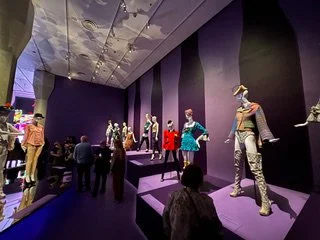
The NGV’s Westwood | Kawakubo exhibition feels less like a polite stroll through fashion history and more like stepping into a spirited argument—one conducted in tulle, tartan, and the occasional aggressively sculptural silhouette. It’s a meeting of minds that never actually met in practice but seem to be in constant conversation here: Vivienne Westwood, Britain’s high priestess of punk, and Rei Kawakubo, fashion’s most enigmatic philosopher. But if Kawakubo supplies the quiet provocation, Westwood arrives with a megaphone—and frankly, she steals the room.
Westwood’s work hits you first with its theatricality. Corsets burst into the gallery space like declarations rather than garments; crinolines are twisted, exaggerated, reimagined with a kind of gleeful irreverence. There’s a sense that history itself is her fabric—18th-century silhouettes sliced up and stitched back together with punk defiance. You don’t just see references to the past; you see them being interrogated, mocked, and lovingly reassembled all at once.
What’s striking is how alive her designs feel. Even behind glass, they seem mid-strut, as if they might step down and start an argument about the monarchy or climate change. That tension—between historical romance and outright rebellion—is where Westwood thrives. She doesn’t reject tradition; she hijacks it.
And then there’s the politics, woven so tightly into her work it’s impossible to separate the message from the medium. Westwood was never content to let fashion be decorative. From her early days dressing the Sex Pistols to her later environmental activism, her clothes function as wearable manifestos. Slogans, subversion, and satire run through the garments like a second stitching. In the NGV show, this comes through not just in text-heavy pieces but in the very attitude of the designs: confrontational, questioning, unwilling to behave.
One particularly compelling thread is her critique of consumerism—a slightly delicious irony given the museum setting. Westwood’s later work, with its emphasis on sustainability and “buy less, choose well,” lands differently when surrounded by carefully preserved luxury objects. Yet it doesn’t feel hypocritical; if anything, it sharpens the point. These are clothes meant to provoke thought, not just desire.
In contrast to Kawakubo’s often cerebral abstraction, Westwood’s pieces feel almost conversational. They invite you in, then challenge you to keep up. There’s humour here too—cheeky proportions, unexpected clashes, a wink behind the rebellion. She understands that to make people listen, you sometimes have to make them laugh first.
The exhibition ultimately frames Westwood not just as a designer but as a cultural agitator. Her fashion isn’t about dressing the body so much as arming it—with ideas, with attitude, with a refusal to comply. Walking through her section, you get the sense that she’s still arguing, still pushing, still insisting that fashion can—and should—matter.
And in a gallery context that often risks turning radical work into something politely archival, Westwood remains gloriously, stubbornly alive.
1975: Living in the Seventies – Exhibition Review
By Steve Starr
S+G+P Publishing
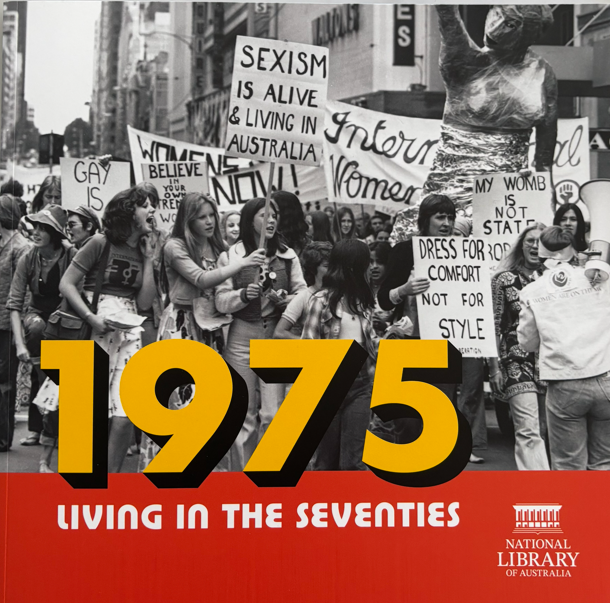
Stepping into the National Library of Australia’s exhibition 1975: Living in the Seventies feels like slipping through a beaded curtain into a world of flared denim, political upheaval and cultural reinvention. Marking fifty years since one of the most transformative years in Australian—and global—history, the exhibition offers a vivid, multi layered portrait of a society in flux. It’s nostalgic, yes, but never sentimental; instead, it’s a sharp, immersive reminder of how the mid 70s shaped the country we know today.
The exhibition frames 1975 as the midpoint of a tumultuous decade, a year defined by both creative explosion and political crisis. Visitors are greeted with iconic photographs from the Library’s collections—images of suburban life, fashion, and protest that instantly set the tone. Wolfgang Sievers’ photography, including scenes from Western Australia and Victoria, captures the era’s blend of optimism and grit.
But the exhibition doesn’t shy away from the darker, more dramatic currents of the year. The dismissal of the Whitlam government looms large, presented not as a dry civics lesson but as a seismic cultural moment that shook a generation. Internationally, the end of the Vietnam War and the independence of Papua New Guinea are contextualised through photographs, news clippings, and personal accounts, underscoring how global events reverberated through Australian society.
The women’s liberation movement also receives thoughtful attention. Archival posters, publications, and interviews highlight the era’s challenges to long held assumptions about gender roles. It’s a reminder that the 1970s were not just about big hair and bigger collars—they were about big ideas. The highlight here is the Carol Jerrems photograph titled Vale Street, undoubtedly the best-known photograph in history of Australian art. The image depicts a topless women flanked by two quite malevolent men, sharpies. The image is reinforced by her commanding presence, her direct gaze and the ankh pendent around her neck. The ancient Egyptian symbol for ‘life‘ was adopted by Second Wave feminists.
Of course, no 1970s exhibition would be complete without the fashion. Burnt orange palettes, platform shoes, and flared jeans are lovingly showcased, alongside the rise of mass market retail culture captured in Sievers’ photographs of Target stores and suburban shopping centres. These everyday artefacts ground the exhibition, making it feel lived in rather than abstract.
One of the exhibition’s strengths is its use of personal voices. TV icon Denise Drysdale, who appears in opening night programming, offers reflections on the era’s television, fashion, feminism, and politics—adding a warm, human dimension to the archival material.
If the 1970s had a soundtrack, Countdown provided it—and the exhibition revels in this. Glam rockers Skyhooks, the irresistible rise of ABBA, and the arrival of colour television all feature prominently, reminding visitors how rapidly Australian pop culture was evolving.
Film buffs will appreciate nods to Picnic at Hanging Rock, Sunday Too Far Away, and the international hits Jaws and The Rocky Horror Picture Show, all of which shaped the cinematic landscape of 1975.
If the 1970s had a soundtrack, Countdown provided it—and the exhibition revels in this. Glam rockers Skyhooks, the irresistible rise of ABBA, and the arrival of colour television all feature prominently, reminding visitors how rapidly Australian pop culture was evolving. A prominent object in the exhibition is the Double Jay Rock ‘1540’ poster that heralded the birth youth radio on Sunday 19 January 1975. Double Jay evolved into Triple J FM.
If there’s a criticism to be made of the exhibition, it lies less in its execution and more in the inherent limitations of history as curated by state funded institutions. The show—and its accompanying publication—suffers from a kind of conscious amnesia, sidestepping the more unruly cultural forces that defined the era. Punk barely rates a mention, the sexual revolution is reduced to a footnote despite its centrality to the women’s movement, and the brief but significant mainstream incursion of pornographic cinema is entirely absent. These omissions feel less like oversights and more like strategic silences. It’s hard to escape the sense that the National Library is steering clear of anything that might provoke discomfort within Canberra’s conservative political ecosystem.
Overall, 1975: Living in the Seventies succeeds because it balances nostalgia with nuance. It invites visitors to revel in the music, fashion, and pop culture of the decade while also confronting the political and social upheavals that defined it. For anyone interested in how Australia became Australia, this exhibition is more than a trip down memory lane—it’s a cultural time capsule with real contemporary resonance.
Annette Haven
The Golden‑Age Icon Who Helped Redefine Feminism and Sexual Freedom
By Steve Starr
S+G+P Publishing
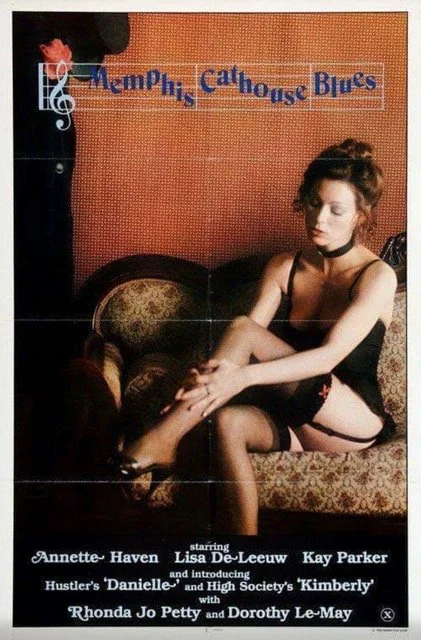
Annette Haven may not be a familiar name to younger readers today, but in the 1970s and early 1980s she was one of the most influential figures of the Golden Age of adult cinema. Her relevance now isn’t about nostalgia—it’s about the way she claimed autonomy, respect, and a feminist voice in a space that rarely offered women any of those things. Her rise unfolded during a cultural turning point. The sexual revolution was challenging long‑held norms, second‑wave feminism was reshaping women’s rights, and debates about censorship, sexuality, and empowerment were everywhere. Haven didn’t just witness that moment—she became part of the international conversation. From Mormon Roots to Self‑Determination Born in Las Vegas in 1954 and raised in a Mormon household, Haven’s early life was defined by strict expectations. Leaving home as a young woman, she worked as a nurse’s aide and later as an exotic dancer—jobs that offered financial independence and a clear view of the economics of women’s labour. These experiences shaped her belief in autonomy and self‑definition, themes that would become central to her later work.
A Star of the Golden Age Haven entered the adult film industry in 1973, just as theatrical adult films were gaining mainstream attention. Shot on 35mm and screened in cinemas, these films often had plots, characters, and ambitions beyond simple titillation. Performers became public figures, interviewed in magazines and discussed in mainstream media. Haven quickly emerged as one of the era’s most respected stars. Over her career, she appeared in more than 200 productions and earned a reputation for professionalism, intelligence, and firm personal boundaries. Directors valued her reliability; co‑stars admired her clarity and confidence. Audiences connected with her “girl‑next‑door” presence, but it was her assertiveness that set her apart. She was selective about roles, insisted on safe and respectful sets, and walked away from situations that didn’t meet her standards. In an industry where women often had little control, Haven’s insistence on agency was quietly revolutionary. Her talent was recognised with awards, including Best Actress at the 1975 X‑Caliber Awards for China Girl and Best Supporting Actress at the AFAA Awards for Coming of Angels (1977). She also made cameo appearances in mainstream films such as Blake Edwards’s 10 (1979) and Brian De Palma’s Body Double (1984), signalling a brief but meaningful crossover into Hollywood.
A Feminist Voice in an Unlikely Place Haven’s feminist significance doesn’t come from academic writing or organised activism. It comes from the way she lived and spoke about her choices. During the 1970s, feminism was deeply divided over pornography. Some activists saw it as inherently exploitative; others argued that sexual expression could be empowering. Haven aligned with the latter.
Her feminist impact can be understood through several key principles:
• Agency — She negotiated her own boundaries and expected them to be respected.
• Autonomy — Her interviews challenged stereotypes about adult performers.
• Sexual empowerment — She argued that women could be sexual on their own terms, without shame.
• Visibility — By speaking publicly about her work, she helped humanise adult performers.
•Her feminism was practical, embodied, and rooted in personal autonomy.
A Symbol of Cultural Change The sexual revolution was about more than free love—it was about challenging the idea that women’s sexuality should be controlled or moralised. Haven became a symbol of this shift: a woman comfortable with her desires, confident in her choices, and unwilling to let society dictate what she could or couldn’t do with her own body. Adult films of the era were reviewed in newspapers, screened in theatres, and discussed in mainstream magazines. Performers like Haven became part of a national conversation about censorship, morality, and personal freedom. Her presence in that conversation mattered. She wasn’t just participating in the sexual revolution—she was helping to shape it. A Personal Note I first connected with Annette Haven while researching an essay on the sexual revolution during my Master of Art degree in 2019. Over time, our conversations became regular, and I now think of her as an “online friend”—sharp, warm, funny, and strong‑willed. These days we talk more about politics, music, and the absurdity of fake autographed photos of her sold online than about her career. Her humour is as disarming as her honesty.
A Legacy That Endures Annette Haven’s legacy extends far beyond her filmography. She helped shift cultural perceptions of sexuality, autonomy, and the role of women in the adult entertainment industry. Her influence can still be felt in sex‑positive feminism, body‑positive culture, and contemporary conversations about agency and consent. Her story is a reminder that feminist icons don’t always emerge from expected places. Sometimes they come from the margins, challenging norms simply by living authentically and refusing to be silenced. Annette Haven didn’t just participate in the sexual revolution—she helped shape its legacy. And in doing so, she carved out a place in feminist history that deserves to be remembered.
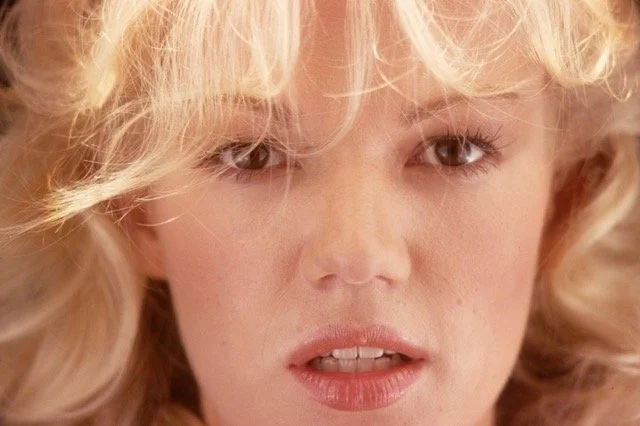
Brigitte Lahaie
The French Icon Who Transformed Erotic Cinema and Rewrote the Rules of On‑Screen Desire
By Steve Starr
S+G+P Publishing
Brigitte Lahaie is one of the most recognisable figures in the history of European erotic cinema, yet her legacy extends far beyond the films that made her famous. In France, she is regarded not only as a Golden‑Age star but as a cultural figure who helped shift public attitudes toward sexuality, female desire, and the legitimacy of erotic storytelling. Her career—spanning adult film, horror cinema, radio broadcasting, and authorship—offers a rare portrait of a woman who refused to be defined by a single role or a single era. From Rural France to the Cinemas of Paris Born in 1955 in Tourcoing, in northern France, Lahaie grew up far from the glamour of Parisian film sets. She moved to the capital as a young woman in search of independence and opportunity, arriving just as France was undergoing its own cultural transformation. The relaxation of censorship laws in the mid‑1970s created a brief but explosive boom in erotic cinema, and Lahaie entered the industry at the moment it was becoming both mainstream and artistically ambitious. Her early films were part of a uniquely French approach to erotic storytelling—stylised, narrative‑driven, and often infused with surrealism or psychological tension. Lahaie quickly became one of the most recognisable faces of the genre, known for her striking presence, emotional intelligence, and the quiet authority she brought to her roles.
A Performer Who Defied Expectations What set Lahaie apart was not simply her beauty or screen charisma, but her seriousness about the work. She approached erotic performance with the discipline of a dramatic actor, insisting that sexuality on screen could be expressive, meaningful, and even poetic. Directors valued her professionalism; audiences responded to her authenticity. She appeared in more than 100 films during the late 1970s, becoming one of the most prominent stars of the French erotic wave. Yet even at the height of her fame, she resisted being reduced to a stereotype. Lahaie spoke openly about her choices, her boundaries, and her belief that erotic cinema could be a legitimate artistic form. In a culture that often-dismissed adult performers, her intelligence and candour challenged assumptions about who could be taken seriously in public life. Reinvention and the Move into Mainstream Cinema Lahaie’s transition into mainstream film remains one of the most remarkable aspects of her career. When the French erotic boom collapsed in the early 1980s, many performers were pushed to the margins. Lahaie, however, reinvented herself. Her breakthrough came through her collaboration with director Jean Rollin, a cult figure in French fantastique cinema. Rollin cast her in several of his atmospheric horror films, including Fascination (1979), where her performance revealed a dramatic depth that surprised critics. She went on to work with respected directors such as Claude Mulot and Jean‑Pierre Mocky, proving that her talent extended far beyond the erotic genre.
This crossover was not merely a career pivot—it was a cultural statement. Lahaie demonstrated that a woman could emerge from adult cinema and still be taken seriously as an artist, a public figure, and a storyteller. A Public Voice on Sexuality and Autonomy In the 1990s and 2000s, Lahaie became a prominent radio host, known for her candid discussions about relationships, intimacy, and sexual wellbeing. Her broadcasts reached millions and helped normalise open conversations about desire, consent, and emotional connection. She also published novels and essays, further establishing herself as a thoughtful commentator on sexuality and human behaviour. Her public voice has always been grounded in a belief that women should define their own desires and their own narratives. She has spoken frequently about agency, self‑respect, and the importance of rejecting shame—ideas that resonate strongly with contemporary sex‑positive feminism. Lahaie currently hosts a weekly program ‘Brigitte Lahaie’ on Sud Radio, France.
A Legacy of Complexity and Courage Brigitte Lahaie’s legacy is one of reinvention, resilience, and cultural impact. She helped shape the aesthetics of European erotic cinema, expanded the possibilities for performers seeking mainstream recognition, and became a public advocate for open, honest conversations about sexuality. Her story complicates the boundaries between genres, between art and eroticism, and between public perception and personal truth. She stands as a reminder that women in erotic cinema have often been far more than the roles they played—they have been innovators, cultural barometers, and, in Lahaie’s case, enduring voices in national conversation. Her career invites us to reconsider what empowerment looks like, and how women can reclaim and redefine their own narratives—even in industries that have historically tried to define them.